
English 
T: +86-15990630008
E: info@chinahdm.com
E: info@chinahdm.com
Industrial zone, Binhai, Jiaojiang, Taizhou, Zhejiang, China


Views: 0 Author: Site Editor Publish Time: 2026-05-06 Origin: Site


In high-pressure fluid power systems, component failure is rarely isolated. A single malfunctioning part often leads to catastrophic downtime and compromises overall operational safety. To prevent these failures, you must understand the foundational architecture of spool-type directional and regulating systems. At the center of this architecture is the dynamic interplay between the internal moving element and the stationary guiding element. We refer to these parts as the core and the sleeve. When they work together seamlessly, they ensure reliable flow control.
This article provides engineers and procurement specialists with an evidence-based framework. You will learn how to evaluate, specify, and source these critical internal components effectively. By examining clearance tolerances, material science, and anti-cavitation designs, we aim to help you build highly resilient systems. Our goal is to outline the exact mechanical variables governing fluid control survival in extreme industrial environments.
The hydraulic valve core and sleeve dictate the precise regulation of fluid flow, pressure limits, and directional control, serving as the mechanical heart of the valve.
Clearance tolerances between the core and sleeve directly impact internal leakage rates and system efficiency, especially under high thermal or pressure stress.
Advanced geometries in sleeve regulating valves are engineered specifically to mitigate cavitation flow, reducing vibration and component wear.
Selecting precision hydraulic fittings requires evaluating material hardness, thermal expansion coefficients, and vendor testing protocols, not just dimensional compliance.
To grasp fluid power efficiency, we first establish the structural relationship between internal mechanisms. The Hydraulic valve core (frequently referred to as a spool or poppet) acts as the primary dynamic element. It shifts back and forth linearly to open or close specific fluid pathways. Conversely, the Hydraulic valve sleeve serves as the robust stationary housing. It acts as a guide. It defines the flow ports and maintains strict alignment for the moving spool under extreme pressures.
Fluid and pressure regulation depends heavily on this exact structural relationship. As the core shifts, its machined lands overlap the metering ports of the sleeve. This calculated overlap restricts or opens the fluid pathway. This movement directly regulates flow rates feeding into actuators. It also maintains essential pressure thresholds across the entire hydraulic circuit. Even a microscopic deviation in this overlap alters the flow curve dramatically.
You must understand why the integrity of this assembly matters deeply in field applications. Manufacturers typically produce and hone these components as intricately matched sets. They undergo precision centerless grinding together. You cannot replace them independently. Mismatched components often lead to severe operational failures. Spool binding occurs when tolerances run too tight. Conversely, excessive bypass leakage happens when gaps allow fluid to slip past the sealing lands. Both scenarios severely degrade system efficiency.
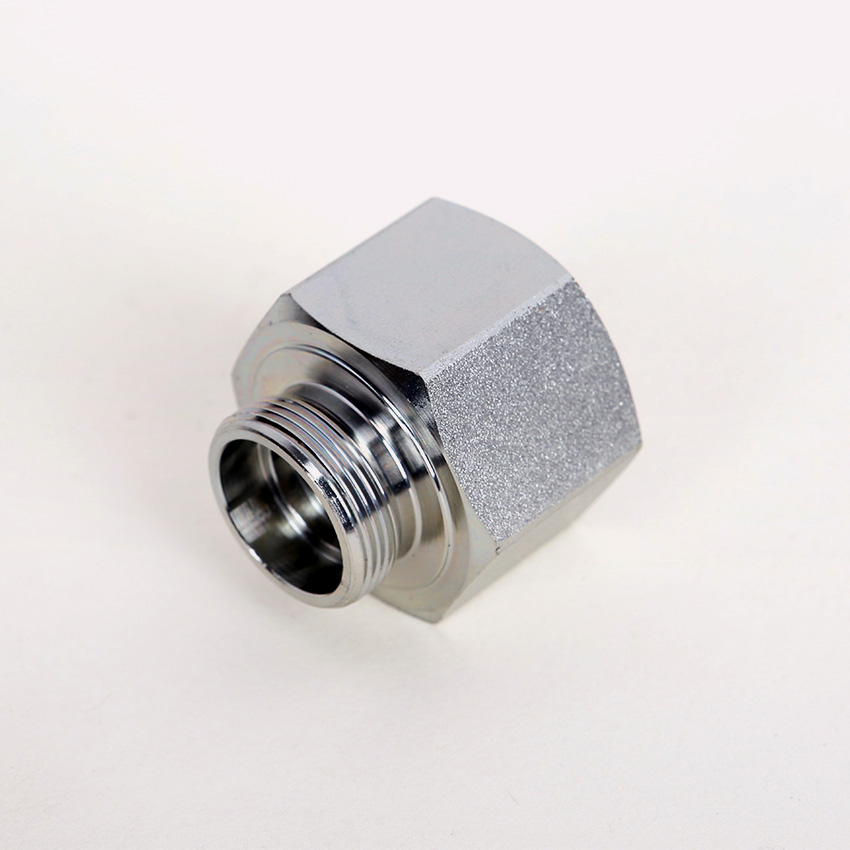
Procuring and specifying Precision hydraulic fittings requires evaluating several microscopic variables. Dimensional compliance alone does not guarantee field reliability. You must assess mechanical tolerances, metallurgy, and thermal behavior.
Modern fluid systems demand micron-level diametrical clearances. Engineers usually target a gap of just 2 to 5 microns between the moving parts. If a manufacturer machines this gap too tightly, you risk stiction. Stiction is static friction preventing the spool from shifting smoothly. It often leads to thermal binding as internal friction generates heat. If the gap is too loose, volumetric efficiency drops rapidly. High-pressure fluid escapes through the widened gap, causing internal leakage and wasting energy.
Standard materials must endure continuous abrasive force. Manufacturers commonly use hardened carbon steel or specialized stainless alloys. However, raw steel cannot survive long term. Surface treatments are absolutely non-negotiable. Treatments like nitriding, carburizing, or hard chrome plating increase surface hardness significantly. These processes prevent galling, where metal surfaces weld together under friction. They also resist abrasive fluid contaminants effectively.
Hydraulic fluid temperatures fluctuate rapidly during heavy duty cycles. Therefore, you must evaluate the risk of thermal shock. The core and sleeve must possess compatible coefficients of thermal expansion. If a steel spool expands faster than a cast-iron housing sleeve, the assembly seizes immediately. Matching these thermal properties allows the components to function reliably regardless of temperature spikes.
Material / Treatment | Primary Benefit | Ideal Application Scenario |
|---|---|---|
Hardened Alloy Steel | High tensile strength and durability | Standard high-pressure industrial systems |
440C Stainless Steel | Excellent corrosion resistance | Marine and offshore environments |
Gas Nitriding | Extreme surface hardness, anti-galling | High-frequency shifting proportional controls |
Hard Chrome Plating | Low friction, high wear resistance | Heavy mobile equipment facing contamination |
High-pressure systems face invisible but highly destructive forces. One of the most severe issues is the cavitation threat. As fluid moves rapidly through restrictive sleeve ports, its velocity spikes. According to fluid dynamics principles, this velocity spike causes a massive localized pressure drop. If the pressure falls below the vapor pressure of the hydraulic oil, vapor bubbles form. When these bubbles move into higher-pressure zones downstream, they implode violently. We call this phenomenon cavitation erosion. It blasts microscopic pits into hardened steel surfaces.
Engineers solve this problem through advanced geometry. They meticulously design specific shapes for both components. Engineers no longer use basic flat edges. Instead, they machine V-notches, U-slots, and parabolic profiles into the spool lands. They optimize these profiles using Computational Fluid Dynamics (CFD) software. The staggered geometry sequences the pressure drop gradually across multiple stages. The sleeve port designs match these notches to ensure smooth fluid expansion, preventing bubble formation entirely.
This anti-cavitation design directly influences long-term reliability. A Hydraulic Valve featuring optimized internal geometry operates much more quietly. It reduces acoustic noise and mechanical vibration. By eliminating metal pitting, you prevent fine metallic contaminants from entering the fluid stream. Consequently, you prolong the operational lifespan of seals, pumps, and downstream actuators.
Heavy duty vehicles place extraordinary demands on fluid power components. A Construction machinery hydraulic system operating inside excavators, cranes, or wheel loaders faces brutal conditions. You cannot rely on standard industrial components here.
These mobile environments expose internal assemblies to high mechanical shock. When an excavator bucket strikes bedrock, the shockwave travels directly back through the fluid into the valve block. These components also face extreme load-holding requirements. They must prevent heavy booms from drifting downward under gravity. Furthermore, external contamination risks remain constantly high on dirt-filled jobsites, demanding robust internal scraping and sealing mechanisms.
The precision of the internal interaction translates directly to operator safety. Operators rely on proportional control to maneuver multi-ton loads accurately. A precisely honed gap ensures smooth, predictable actuator movements. When the operator barely moves the joystick, the fluid meters slowly and smoothly. Jerky, unpredictable responses caused by sticky or worn spools endanger personnel. They also damage fragile cargo and compromise jobsite stability.
Mobile equipment experiences constant dynamic loads. To combat this, engineers integrate advanced internal spring mechanisms directly with the core. These springs serve several essential functions in mobile environments:
Flow Force Compensation: They counteract transient hydrodynamic forces pushing against the spool during high-velocity flow.
Vibration Damping: They absorb mechanical chatter originating from the pump or the actuator.
Precise Self-Centering: They force the internal components back to a neutral, fail-safe position instantly when the operator releases the controls.
Sourcing high-performance internal components demands rigorous vendor evaluation. Procurement teams must look past basic dimensional drawings. You need empirical proof of performance and reliability.
Look for manufacturers who readily provide detailed empirical data. A reputable vendor understands dynamic performance metrics. Ask them for step-response times measured in milliseconds. Request flow-force compensation curves showing how the assembly behaves under maximum load. Furthermore, demand lifecycle cycle-testing data. You need to know if the parts maintain their micron clearances after one million shift cycles.
Stringent compliance protocols separate premium manufacturers from average machine shops. Ensure the vendor utilizes rigorous testing requirements. Look for the following quality indicators:
100% Factory Pressure Testing: The vendor must test every matched set for internal leakage before shipping.
Material Traceability: The vendor should provide heat lot certificates verifying the exact metallurgical composition.
ISO Certification: Look for ISO 9001 compliance governing their machining and honing processes.
Cleanroom Assembly: High-precision components must be assembled in controlled environments to prevent dust contamination.
You must establish a logical framework for component specification. Standard ISO-compliant cartridge valves suffice for many baseline applications. They work well for simple directional control and auxiliary functions. However, custom-engineered profiles become necessary for proprietary machinery. If your equipment requires specialized pressure sequencing or unique anti-cavitation parameters, standard parts will fail. In these scenarios, collaborating closely with a manufacturer on custom geometric profiles provides a massive competitive advantage.
The overall performance of any high-pressure fluid system is ultimately governed by the micro-dynamics happening deep inside its housing. The precise interaction between the moving core and the stationary sleeve dictates flow accuracy, pressure stability, and directional reliability. Even a single micron of excessive wear or thermal distortion leads to system-wide inefficiencies.
Investing in high-quality, perfectly matched components remains the most effective strategy for ensuring reliability. By prioritizing advanced materials, proper thermal matching, and anti-cavitation geometries, you directly mitigate the hidden penalties of fluid power inefficiencies. You protect your systems from catastrophic machine downtime.
We encourage engineers and buyers to move beyond standard catalog browsing. Consult directly with technical specialists regarding your specific application. Request comprehensive component specification sheets highlighting step-response times and leakage rates. Consider initiating a prototype testing phase to validate the performance of precision fluid components under your exact operating conditions.
A: Generally, no. In high-precision directional and proportional valves, the core and sleeve are machined and honed as a matched set to guarantee micro-clearances. Mixing parts compromises performance, leading to severe internal leakage or catastrophic spool binding.
A: Symptoms include increased internal leakage causing dangerous actuator drift. You will also notice sluggish response times and difficulty holding system pressure. Additionally, elevated hydraulic fluid temperatures often occur due to continuous energy loss.
A: Common causes include microscopic fluid contamination wedged in the tight clearance. Thermal expansion mismatch due to sudden temperature spikes also causes binding. Finally, over-torquing the valve body during installation often distorts the stationary housing, crushing it against the spool.


