
English 
T: +86-15990630008
E: info@chinahdm.com
E: info@chinahdm.com
Industrial zone, Binhai, Jiaojiang, Taizhou, Zhejiang, China


Views: 0 Author: Site Editor Publish Time: 2026-05-20 Origin: Site


Every industrial fluid system relies on a silent workhorse to keep operations running smoothly. The Valve Stem plays a critical role in transferring motion and maintaining pressure integrity across complex networks. Without it, precise fluid control becomes entirely impossible.
Unfortunately, many facilities still rely on reactive maintenance strategies. This approach directly leads to unplanned downtime and dangerous fugitive emissions. Equipment failures disrupt production lines and pose severe safety hazards to plant personnel. You simply cannot afford to ignore early warning signs.
You need a better way to manage these crucial parts. This guide provides engineering and maintenance teams with an evidence-based framework for component upkeep. We will explore troubleshooting methods and standardized replacement evaluations. You will learn practical steps to keep your hydraulic systems operating safely and efficiently.
Transitioning to predictive maintenance can reduce operational costs by 30–40% compared to run-to-failure approaches.
Effective stem packing requires precise 45-degree ring cuts and sequential layering; continuous coiling causes pressure gaps and leak paths.
Accurate troubleshooting must isolate "shell leaks" (stem to atmosphere) from "seat leaks" (internal bypass) to determine the repair scope.
Evaluating the shift from standard OEM parts to custom high durability hydraulic components is essential when recurring pitting or corrosion compromises the stem.
Many plant managers underestimate the financial drain caused by minor leaks. A compromised seal might seem like a nuisance. In reality, it represents a massive loss of valuable resources. You must calculate the actual cost of fluid loss to understand the urgency of proper maintenance.
We often dismiss a slow drip. However, a data-backed cost model reveals the true impact of these seemingly minor issues. When you measure the volume over an entire year, the numbers become alarming. Fluid loss increases operational budgets and creates environmental cleanup liabilities.
Leakage Rate (Drops per Minute) | Daily Fluid Loss (Liters) | Annual Fluid Loss (Liters) | System Impact |
|---|---|---|---|
1 Drop | 0.14 | 50 | Minor pressure fluctuations. |
6 Drops | 0.82 | 300 | Noticeable efficiency drop; increased top-off costs. |
12 Drops | 1.64 | 600 | Severe system inefficiency; immediate repair required. |
Relying on a failure-based model drains your maintenance budget. When parts break unexpectedly, you pay premium rates for emergency labor and expedited shipping. Preventative, time-based maintenance offers a slight improvement. Yet, it often forces you to replace parts prematurely.
Predictive maintenance delivers the highest return on investment. You can monitor system health in real-time by integrating SCADA sensors and Non-Destructive Testing (NDT). This modern approach alerts you to friction anomalies before actual failure occurs. Facilities adopting predictive strategies routinely see their operational costs drop significantly.
Financial losses only tell half the story. Compromised Mechanical hydraulic accessories introduce severe safety hazards into your facility. High-pressure blowouts can cause catastrophic injuries to nearby workers. Fugitive emissions release hazardous hydraulic fluids into the environment.
Regulatory agencies impose heavy fines for environmental contamination. Maintaining pressure integrity keeps your facility compliant with strict industry regulations. Regular inspections ensure a safe environment for your team and protect your company from legal liabilities.
Proper installation dictates the lifecycle of your components. Even the highest quality materials will fail if you install them incorrectly. We highly recommend standardizing your packing process across all maintenance teams. This uniformity eliminates guesswork and ensures consistent reliability.
You must prepare the environment before applying any new materials. Skipping these preliminary steps guarantees premature seal failure. Follow this strict sequence:
Depressurize and isolate: Shut down the system completely. Lock out the energy sources and bleed off all residual pressure.
Flush the system: Remove old fluid residue. Contaminated media will immediately degrade new packing materials.
Inspect the bare metal: Use a probing mirror to examine the surface closely. Look for micro-pitting, scoring, or uneven wear patterns. Any surface defect will shred new packing under pressure.
The actual packing process requires precision. Small technique variations create massive differences in performance. Maintain strict adherence to these execution rules:
Do cut packing material at a strict 45-degree angle. This creates a seamless overlap when the gland applies pressure. A perfectly angled cut prevents fluid from finding an escape route.
Do install packing one single ring at a time. Seat each ring firmly into the stuffing box before adding the next. This ensures uniform density.
Don't wrap the packing material in a continuous coil. Coiling creates immediate leak paths upon repressurization. Fluid will simply travel down the spiral gap.
Don't over-pack or over-torque the gland nuts. Excessive torque lowers the overall PSI capacity. It crushes the seal fibers and causes stem stiction, preventing smooth actuation.
Never reuse old hardware. Gland studs, nuts, and washers experience metal fatigue over time. Reusing them compromises your ability to apply even torque. Always replace this hardware concurrently with the stem packing. Fresh hardware guarantees uniform tension and prevents uneven compression on the new seal.
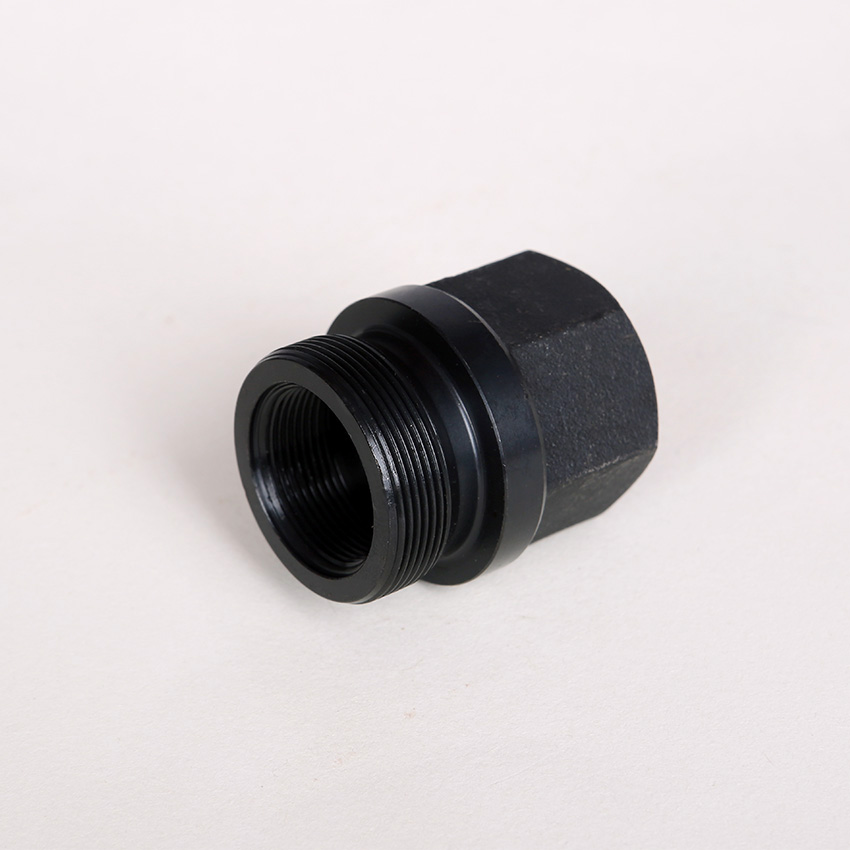
Troubleshooting complex systems requires a structured approach. Guesswork wastes time and risks further damage. The T-I-R-M framework provides a reliable methodology for Hydraulic fitting maintenance. By systematically testing, inspecting, repairing, and maintaining, you can resolve issues permanently.
You must first identify where the fluid is escaping. A misdiagnosed leak leads to unnecessary teardowns. We categorize these failures into two distinct types. A Shell Leak occurs when fluid escapes around the stem and enters the atmosphere. You will see visible dripping on the exterior. A Seat Leak means fluid bypasses the internal seal while closed. You detect this by monitoring pressure drops downstream.
Once you locate the leak, find out why it happened. Check for mechanical failure modes immediately. Spool stiction often results from fluid contamination. Particulates wedge between moving parts, preventing smooth operation.
Next, inspect the lubrication profile. Incorrect lubrication destroys components rapidly. Over-greasing attracts abrasive debris, turning the lubricant into a grinding paste. Under-greasing accelerates friction wear. You must also verify chemical compatibility. Using petroleum-based grease on EPDM rubber seals will cause them to swell and disintegrate.
Execute repairs with precision and care. When cleaning internal deposits, avoid highly destructive chemical solvents. Harsh chemicals erode the microscopic finish on metal surfaces. Use approved industrial cleaners and soft brass brushes instead.
After reassembly, you cannot simply turn the machine back on. You must recalibrate actuator feedback mechanisms. Ensure the control system accurately recognizes the fully open and fully closed positions. Skipping calibration leads to motor burnout.
Repairs hold little value if you do not track them. Implement visual tag systems on the plant floor. Color-coded tags instantly communicate the status of a specific component to any passing technician. Furthermore, update your replacement logs immediately. Tracking component lifecycles allows you to predict future failures accurately.
Standard maintenance procedures fall short in extreme conditions. High-pressure lines amplify every minor flaw. You need specialized strategies to handle these demanding environments safely.
Applying grease to valves in high-pressure lines requires immense precision. You cannot treat it like standard equipment. If your injection pressure is insufficient, the system pressure will push back, compromising the newly applied seal.
Conversely, excess injection pressure creates a hydraulic lock. Forcing too much grease into the cavity can lock the stem and wedge the valve plate permanently. Technicians must use metered grease guns equipped with accurate pressure gauges. Always reference the OEM specifications for exact injection thresholds.
You cannot perform deep maintenance while the plant runs. Annual scheduled shutdowns offer the perfect window for comprehensive care. Use this planned downtime strategically to revitalize your critical infrastructure.
Tear down critical-path valves: Disassemble your most vital components for thorough internal cleaning. Remove baked-on scale and varnish.
Replace degraded polymers: Elastomers, rubber seals, and plastics become brittle under constant thermal stress. Swap them out entirely during the shutdown, even if they look intact.
Utilize Non-Destructive Testing (NDT): Surface inspections miss deep structural flaws. Use ultrasonic testing or dye penetrant methods to identify subsurface fatigue. This detects micro-cracks in the body before they cause a blowout.
To help manage these shutdowns, we recommend using a simplified visual chart for scheduling:
Day 1-2: System depressurization, lockout/tagout, and initial fluid flushing.
Day 3-5: Teardown of critical path equipment and elastomer replacement.
Day 6-7: NDT inspections (ultrasonic/dye) on high-stress pressure vessels.
Day 8-10: Reassembly, actuator calibration, and low-pressure leak testing.
Maintenance teams constantly face a difficult choice. Do you fix the broken part again, or do you replace it entirely? Throwing money at a doomed component drains resources. You need clear criteria to make intelligent upgrading decisions.
Certain types of damage cannot be repaired. You must define a strict threshold for scrapping hardware. Deep corrosion that compromises pressure ratings requires immediate disposal. Machining away rust thins the walls, making it unsafe for high-pressure use.
Look for permanent thread damage caused by over-torquing. Stripped threads cannot hold uniform tension. Finally, inspect for severe cavitation pitting. Cavitation literally tears chunks of metal away from the surface. If the pitting is too deep to be polished out, the part is dead.
When replacement becomes necessary, do not automatically order the exact same part. If the original failed prematurely, the environment might be too harsh for standard OEM replacements. Consider upgrading your system.
Harsh environments demand superior materials. Upgrading to Custom High durability hydraulic components solves chronic failure loops. You might specify surface-hardened alloys to resist particulate abrasion. For highly corrosive media, switching to advanced PTFE or graphite packing significantly extends operational life.
Making the final decision requires a practical financial assessment. Compare your historical maintenance expenses against the price of an upgrade. Look closely at the labor required for frequent repairs. Factor in the lost revenue from repeated production downtime.
If the combined costs of endless patching exceed the premium of buying a specialized, high-durability package, the choice is clear. Upgrading eliminates the recurring headache. It stabilizes your production line and frees up your maintenance team for more important tasks. Replacement becomes the only financially sound decision.
Long-term valve stem reliability starts with correct installation and is sustained through rigorous, data-driven maintenance. You cannot expect a system to survive if you ignore the fundamental rules of fluid control. Predictive strategies always outperform reactive panic.
Minor execution details dictate the entire lifecycle of the equipment. A precise 45-degree packing cut and accurate torque specifications make the difference between a secure seal and a dangerous blowout. Precision matters at every step.
Your next step is straightforward. Audit your current leakage rates to understand your baseline losses. Review your existing operating procedures against the T-I-R-M framework. If environmental wear constantly destroys your standard parts, consult a component specialist to explore custom high-durability upgrades.
A: A shell leak involves hydraulic fluid escaping past the valve stem packing into the outside environment. It creates visible messes and external hazards. A seat leak is an internal bypass where fluid pushes past the closed seating surface within the pipe, causing pressure loss downstream without spilling outside.
A: Frequency depends entirely on cycle rates, operating pressure, and media corrosiveness. High-load or high-temperature applications usually require quarterly inspections and frequent repacking. Conversely, low-load systems typically run fine and align with annual scheduled plant shutdowns for replacements.
A: It is highly discouraged. Reusing fatigued hardware compromises the ability to apply even torque. Uneven torque is the primary cause of uneven packing compression, which inevitably leads to subsequent stem leaks and catastrophic seal failure.
A: Stiction is generally caused by fluid contamination from particulate buildup. It also stems from over-tightened packing glands or degraded lubrication. It requires immediate isolation and cleaning to prevent actuator motor burnout or mechanical linkage failure.


