
English 
T: +86-15990630008
E: info@chinahdm.com
E: info@chinahdm.com
Industrial zone, Binhai, Jiaojiang, Taizhou, Zhejiang, China


Views: 0 Author: Site Editor Publish Time: 2026-05-22 Origin: Site


Modern farm equipment operates in unforgiving conditions. Constant vibration, abrasive dust, extreme temperature swings, and sudden pressure spikes put immense stress on every component. You rely heavily on your machinery during narrow planting and harvesting windows. Any breakdown directly threatens your operational yield. Premature failure of a single control mechanism disrupts this vital productivity. It quickly leads to internal fluid leakage, sluggish actuator response, and expensive unplanned downtime. You cannot afford these delays when weather patterns dictate your schedule.
This guide offers a vendor-neutral, engineering-focused framework for evaluating these critical parts. We will help you compare and source robust components built specifically for agricultural realities. You will learn exactly how material hardness, surface treatments, and dimensional tolerances dictate field reliability. By the end, you will understand how to choose parts engineered for maximum uptime and efficiency.
Agricultural hydraulic systems routinely experience operating pressures of 2,000 to 3,000 PSI, requiring valve stems engineered from hardened steel or specialized alloys.
Up to 80% of hydraulic failures stem from fluid contamination; choosing a wear resistant valve stem with proper surface treatments minimizes scoring and extends component life.
Evaluating a supplier requires looking beyond unit price to structural testing data, tolerance precision, and compatibility with long service life hydraulic fittings and seals.
A compromised control mechanism degrades overall machine performance. When a stem wears down unevenly, it creates tiny gaps inside the manifold. Fluid bypasses the intended pathways. This internal leakage causes immediate pressure drops across the circuit. Hydraulic pumps must work much harder to compensate for this lost pressure. Consequently, the engine burns more fuel to drive the struggling pumps. Inefficient systems can waste up to 25% more energy. You lose money on excess fuel while simultaneously reducing the lifespan of your main pump.
Catastrophic component failure also introduces severe safety and compliance risks. High-pressure fluid leaks are incredibly dangerous. If a worker inspects a leaking manifold, a pinhole leak can inject fluid directly into their skin. These high-pressure injection injuries cause severe tissue damage and require immediate surgical intervention. Preventing these hazards requires proactive part selection.
We must view the procurement of Agricultural machinery hydraulic parts as a strict risk-mitigation strategy. Choosing high-quality components is not merely a routine maintenance expense. It acts as an insurance policy against catastrophic downtime. Reliable parts keep your operators safe and your harvesting schedules on track.
Engineers evaluate several material options when designing components for heavy machinery. Standard carbon steel provides a cost-effective baseline. However, it remains highly susceptible to rapid wear and aggressive corrosion. Exposed agricultural environments quickly degrade untreated carbon steel.
Hardened alloy steel serves as the industry standard for high-pressure systems. These alloys comfortably handle pressures exceeding 5000 PSI. Manufacturers use advanced heat treatment processes to lock the internal molecular structure. This prevents physical deformation when heavy tractor implements place sudden loads on the circuit. Stainless steel offers excellent corrosion resistance. It works perfectly when machines handle harsh chemical fertilizers or operate in coastal weather. However, stainless steel often compromises slightly on tensile strength compared to hardened alloys.
You must also consider implementation realities inside the control block. Mixing dissimilar metals creates major problems. Installing a steel stem inside an aluminum manifold risks galvanic corrosion. Moisture acts as an electrolyte between the two metals, rapidly accelerating material decay. You must match materials carefully.
Surface treatments provide the final layer of defense. A genuine Wear resistant valve stem requires specialized coatings. Hard chrome plating or nitrocarburizing significantly increases surface hardness. These treatments resist abrasive agricultural dust, prevent deep scoring, and drastically extend the operational lifespan of the part.
Material Type | Pressure Capacity | Corrosion Resistance | Primary Agricultural Application |
|---|---|---|---|
Standard Carbon Steel | Low to Medium | Poor (without coating) | Light-duty implements, protected cabins |
Hardened Alloy Steel | Extremely High (5000+ PSI) | Moderate | Heavy tractors, balers, primary lifting cylinders |
Stainless Steel | Medium to High | Excellent | Fertilizer spreaders, crop sprayers |
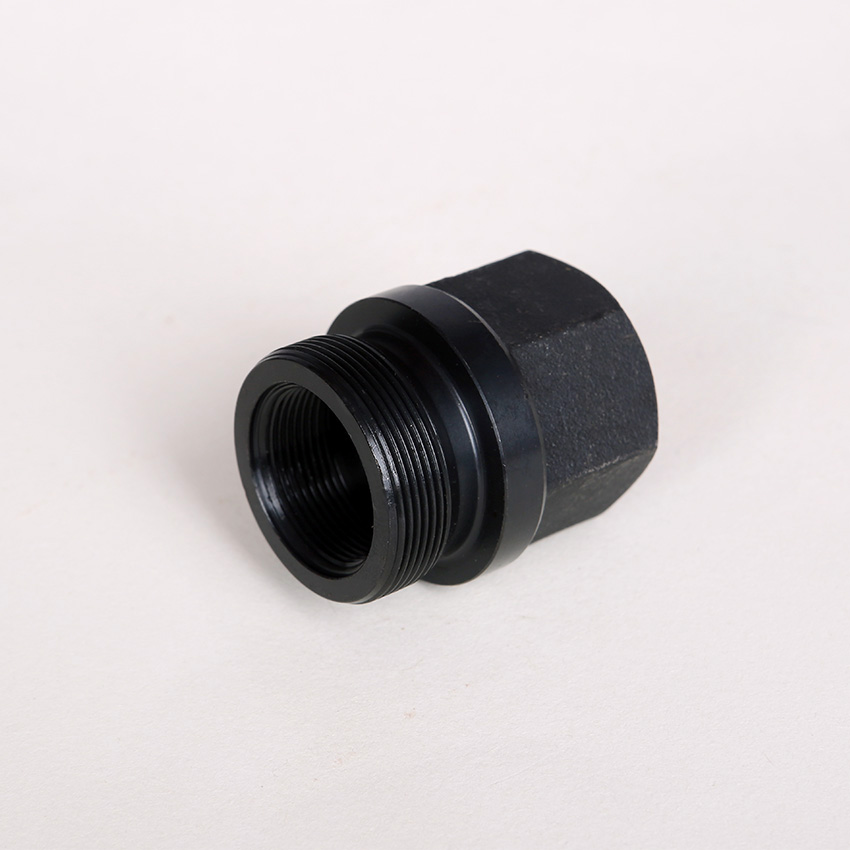
Engineers and procurement managers need a concrete checklist when reviewing manufacturer spec sheets. You cannot rely on marketing claims alone. You must verify exact technical parameters before approving any new vendor. The following numbered list details the mandatory evaluation criteria.
Continuous Pressure Ratings: The component must handle daily continuous working pressures without stress fatigue.
Spike Tolerance: Agricultural systems experience severe sudden pressure spikes. Dropping a heavy implement can generate spikes reaching 1.5x to 2x the normal operating pressure. The part must survive these surges without warping.
Dimensional Tolerance: Micron-level precision is non-negotiable. Tight tolerances prevent internal bypass leakage.
Thermal Clearances: While tolerances must be tight, they must also allow enough clearance for thermal expansion. Hydraulic oil gets extremely hot during continuous operation. Parts expand, and insufficient clearance causes complete system lockup.
Actuation Force and Weight: The physical weight and surface friction dictate the response time of electro-hydraulic control valves. Lighter, well-polished stems respond faster to electronic signals.
Procuring a precision-machined Valve Stem ensures your machine reacts instantly to operator inputs. Below is a simplified HTML chart summarizing how response times degrade when clearance tolerances are too tight or too loose.
Clearance Deviation | Actuator Response Time (ms) | System Symptom |
|---|---|---|
Optimal (Micron spec) | 25 - 40 ms | Instant, smooth operation |
Too Tight (-10 microns) | 80 - 150 ms | Sluggish, potential thermal lock |
Too Loose (+15 microns) | 60 - 90 ms | Drifting cylinders, internal leakage |
Industry data consistently proves one harsh reality. Roughly 80% of all hydraulic system failures are contamination-related. Dust, dirt, and microscopic metal shavings infiltrate the fluid lines. These particles act like liquid sandpaper. They score internal surfaces and destroy precision tolerances in days. Defending against this contamination dictates your maintenance schedule.
A control mechanism never operates in isolation. It maintains an intimate, continuous relationship with system seals. The surface finish of the moving metal dictates the lifespan of O-rings and backup rings. Engineers measure surface roughness using an Ra value. If the metal is too rough, it literally shreds the rubber seals during every stroke. If the metal is too smooth, it cannot hold the microscopic film of oil needed for lubrication. You must aim for an optimal Ra value to balance oil retention and seal protection.
Material matching plays an equally critical role. You must match metal alloys and operational temperatures with appropriate seal compounds. Standard Nitrile (NBR) seals work perfectly for everyday agricultural use. However, if your Farm equipment hydraulic system operates in extreme heat or handles caustic chemicals, NBR will fail. You must specify FKM or Viton seals for harsh environments. A durable component combined with the wrong seal compound still results in a catastrophic leak.
Separating reputable manufacturers from low-tier suppliers requires strict evaluation lenses. Unit price tells you very little about long-term reliability. You must demand testing transparency from any prospective vendor. Look for suppliers who willingly provide comprehensive cycle-testing data. They should also supply burst pressure certifications and salt-spray test results. These documents prove their corrosion resistance claims are based on actual laboratory evidence, not assumptions.
Quality Control (QC) infrastructure separates the best facilities from average machine shops. Emphasize the absolute importance of ISO 9001 certification. A certified facility follows strict, documented procedures for every batch of metal. Furthermore, ask if the vendor uses automated optical inspection (AOI). AOI uses high-speed cameras to verify micron-level tolerances on every single part before shipping. This technology ensures perfect batch-to-batch consistency. You will never receive an out-of-spec part that slipped past a tired human inspector.
Finally, assess their engineering support and customization capabilities. Standard parts work for standard tractors. However, specialized agricultural implements often require unique flow characteristics. Seeders, balers, and precision sprayers might need specific metering notches cut into the metal profile. A top-tier manufacturer can engineer these custom profiles rapidly. When you source Long service life hydraulic fittings and specialized components from a capable partner, you future-proof your machinery design.
Choosing the correct components requires balancing material hardness, surface finish, and precise tolerances against extreme agricultural environments. You cannot compromise on precision if you want reliable machinery. Every decision impacts your uptime during critical harvesting windows.
Audit your current equipment to identify recurring failure points and internal leakage symptoms.
Consult directly with your engineering team regarding specific tolerance requirements and thermal expansion risks.
Demand comprehensive laboratory testing documentation, including salt-spray and burst pressure data, from prospective suppliers.
Specify optimal surface roughness (Ra values) to protect your seals and minimize contamination damage.
Establish partnerships with ISO-certified vendors utilizing automated optical inspection for guaranteed batch consistency.
A: Look for drifting cylinders when the control levers are in neutral. You might also notice sluggish implement lifting or excessive heat generation near the control block. An audible hissing sound at the manifold often indicates high-pressure fluid bypassing a worn internal tolerance.
A: Industry standards typically aim for an Ra value between 0.2 to 0.4 micrometers. This specific range is critical. It provides enough microscopic texture to retain a thin lubricating oil film, while remaining smooth enough to prevent abrasive damage to O-rings and backup seals.
A: In highly precise spool-type valves, the internal components and the outer body are often matched at the factory. Because clearances rely on micron-level precision, replacing just one moving part may not resolve tolerance issues. You usually need to replace the entire matched set for guaranteed performance.


